
JBOD FLEX Solutions
Just a Bunch Of Drives
Simplified and flexible expansion for changing storage capacities
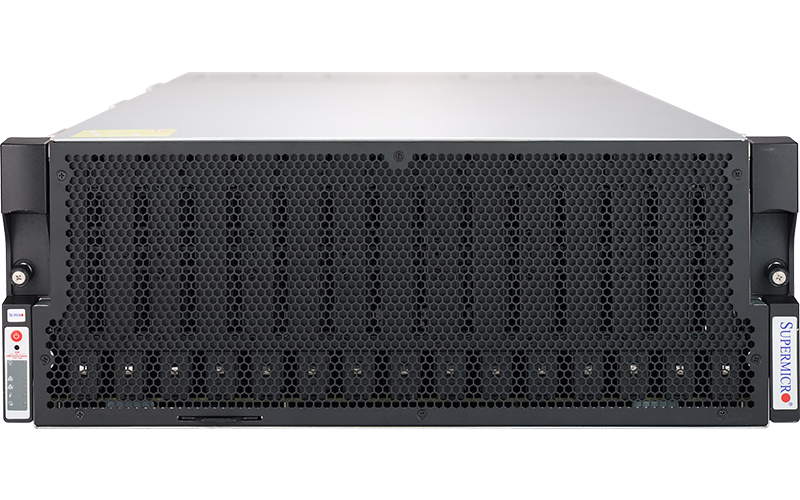
Simplified and flexible expansion for changing storage capacities
Often referred to as “just a bunch of disks” or “just a bunch of drives”, a JBOD system provides the means to add additional capacity to an existing storage architecture. The drives can be used as individual logical volumes or configured as a RAID using a RAID card or software. This disk drive platform provides workflow flexibility and control of data storage and backup strategies that can reduce the need for multiple external hard drives.
Green Matrix Technology supplies a range of JBOD platforms from HGST, Supermicro and other vendors that are custom configured to minimize your cost while meeting your exact requirements.
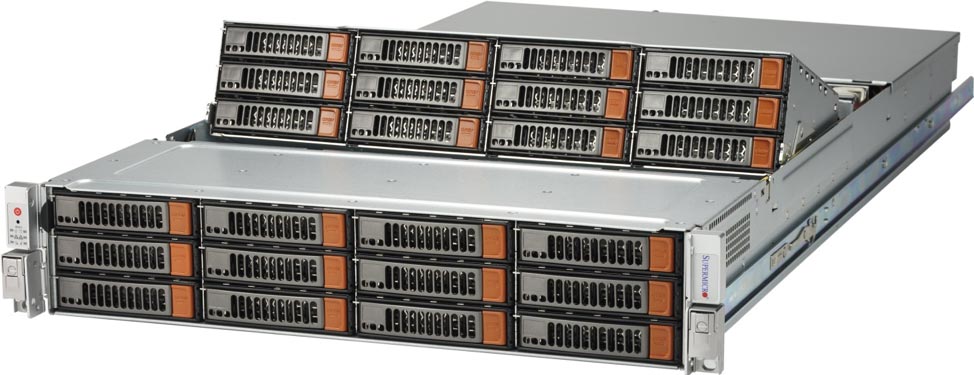
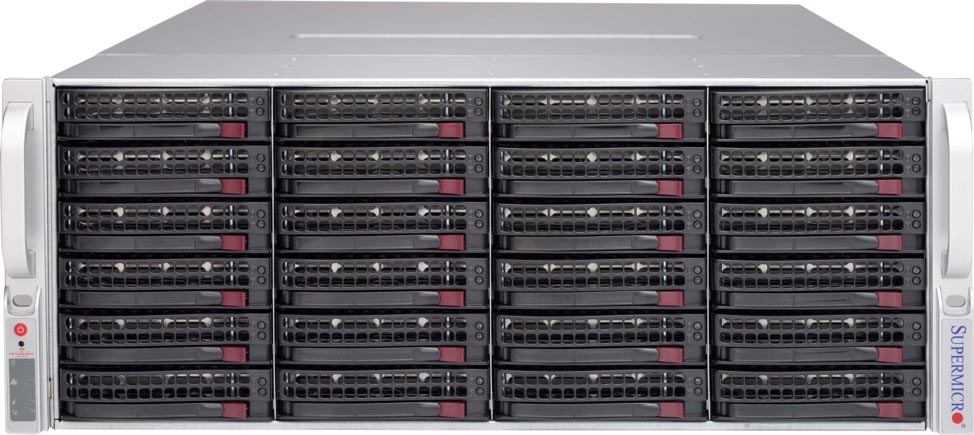
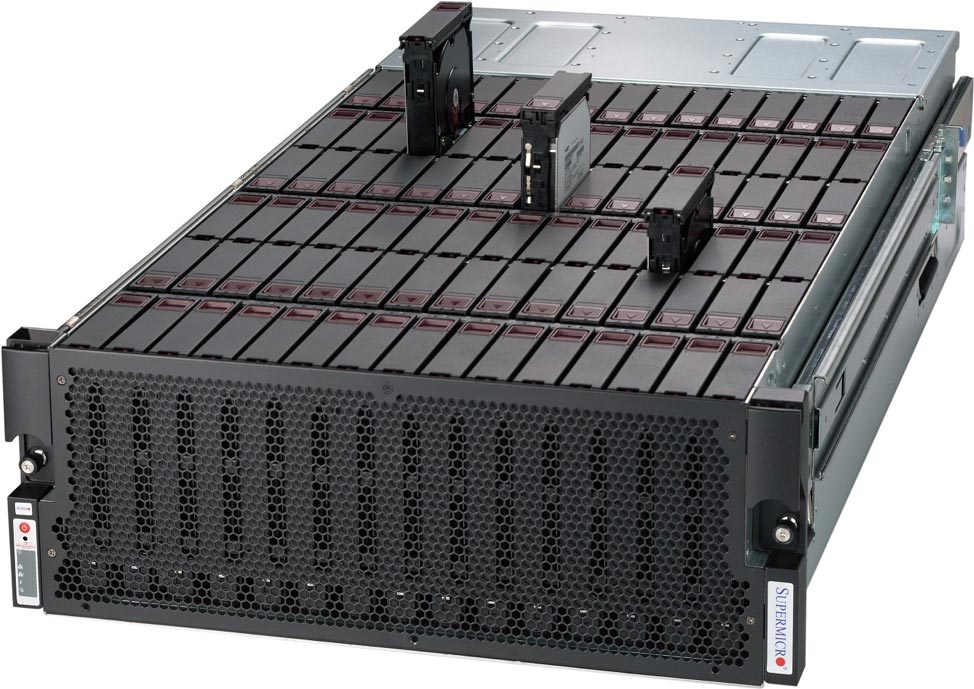
A JBOD should not be considered as a replacement to a RAID system, after all RAID expansion chassis are just JBOD. The primary differences between RAID storage and JBOD are the RAID controller in storage is internal whereas a JBOD connects via an external controller. A RAID controller typically stripes data across the disks in a dataset, whereas a JBOD views disks individually and this makes it ideal for software defined applications such as those listed below. In a software defined application data is written to a drive(s) within a JBOD and this is then replicated “X” times to the next node in order to provide data protection. This makes software defined applications faster at reading and writing data as it is written on the device as a continuous block whereas a RAID writes and reads data across many drives within the stripe, this is why RAID storage manufacturers make recommendations, regarding the optimal number of drives to have in a stripe to provide maximum performance. Software defined applications do not suffer from the problem of RAID rebuild which is especially bad when using larger drives as rebuild times could take many days to complete affecting performance and the potential for further data loss. As a software defined application copies all the data to multiple drives therefore no RAID rebuild.




Copyright © 2020 Green Matrix Technology. All Rights Reserved. Privacy Policy.